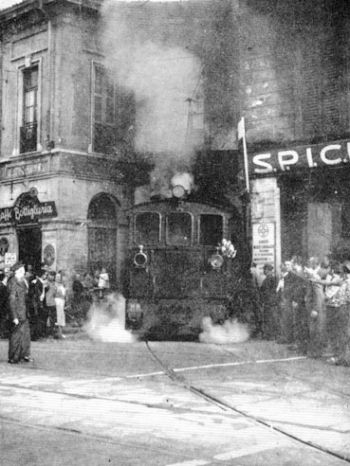
Origins and Early Development
As every commitment deserves fulfillment, here's the fascinating chronicle of Milan's most renowned suburban tramway system.
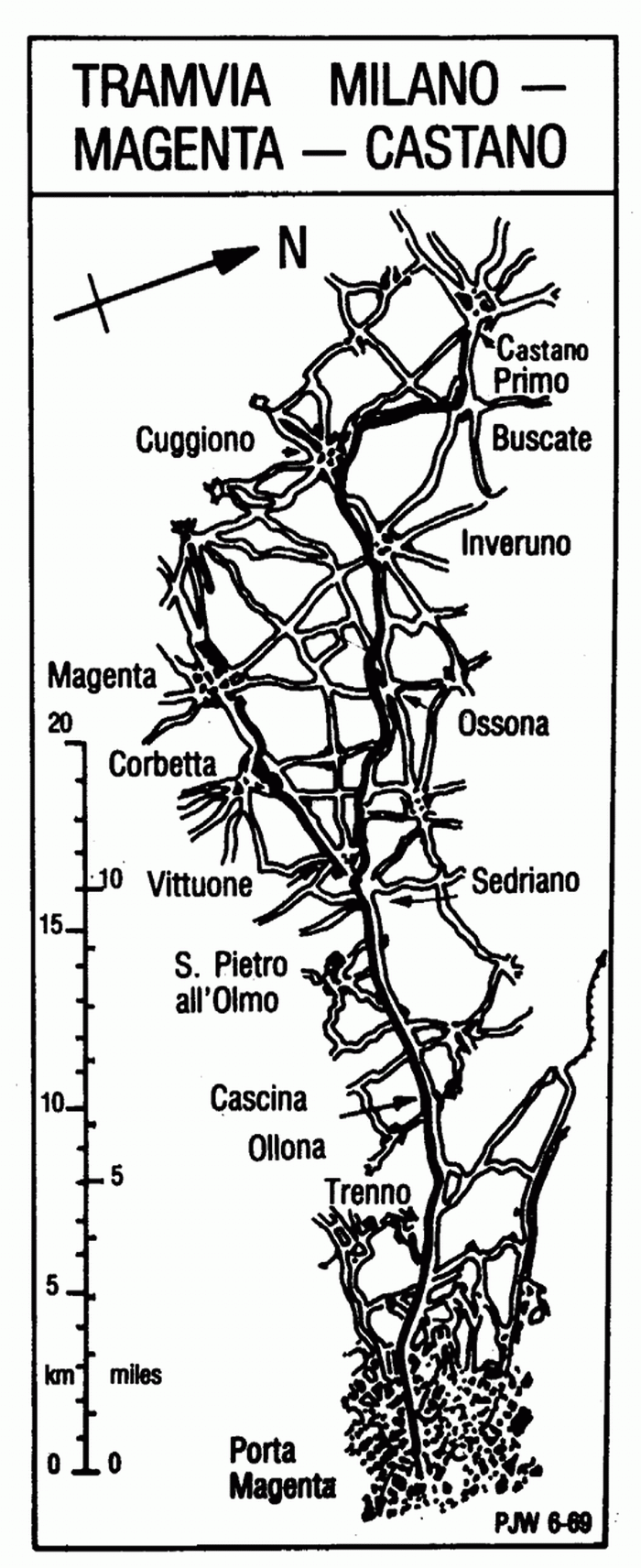
The tale of the Gamba de Legn' (the authentic Milanese spelling) began on September 9, 1878, when authorization was granted to build a steam-powered tram route connecting Milan with Magenta. This ambitious project spanned approximately 23 kilometers, with an additional branch extending from Sedriano to Castano Primo. By 1879, the inaugural section from Milan to Sedriano opened for service, with the complete route following shortly thereafter.
For its time, this represented a remarkable technological advancement compared to Milan's horse-drawn streetcars operated by SAO, which could barely carry ten passengers, or even the Monza tramway, which continued using horse power for another two decades until 1900. The Gamba de Legn', by contrast, offered significantly greater passenger capacity across multiple carriages, maintaining a commercial speed of roughly ten kilometers per hour.
Technical Innovation and Design
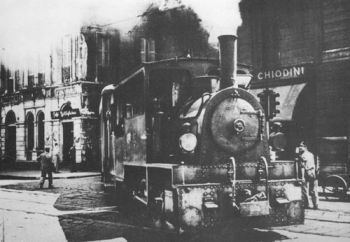
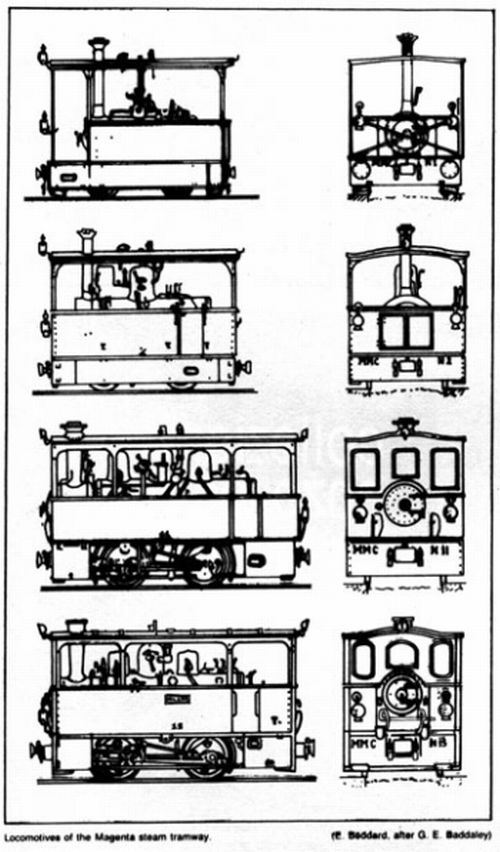
The original locomotives were manufactured by Lokomotivenfabrik Krauß and featured a completely different structure from standard railway engines. Safety regulations mandated that the boiler and engine components be fully enclosed within a protective body. Additionally, the operator's position was placed at the front of the locomotive to ensure optimal visibility for the driver. Notably, the selection of these German locomotives was influenced by their production of less dense smoke compared to other manufacturers.
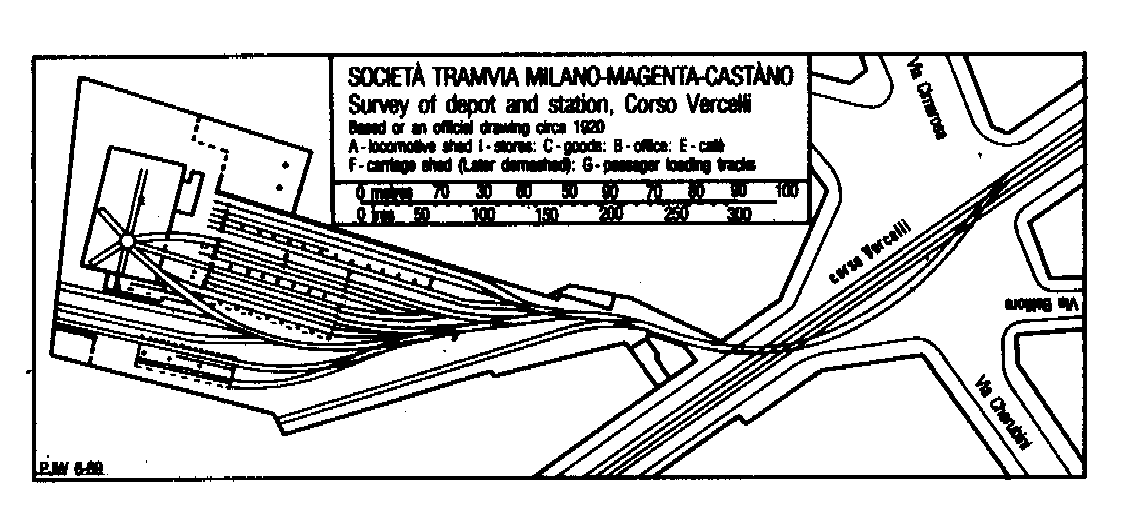
Initially, the Milan terminus was located at what is now Piazza Baracca, before being relocated in 1911 to the carriage depot at Corso Vercelli 33.
Speed Regulations and Safety Protocols
The Milan Provincial Council established strict speed limits for the convoy:
- 15 km/h maximum in open countryside
- 10 km/h within Milan city boundaries
- 5 km/h during fog, heavy traffic, or extraordinary public order situations
- During foggy conditions (extremely common in this region), a pedestrian escort with a whistle preceded the convoy to warn of approaching danger
When service commenced, ticket prices were set at 5-7 centesimi per kilometer for first-class travel and 4 centesimi per kilometer for second-class passengers.
Route Description and Major Stops
Departing from Corso Vercelli, the Gamba de Legn' made its first stop at the San Pietro in Sala suburb (today's Piazza Wagner, served by Metro Line 1), marking the outer boundary of Milan's inhabited area. The route continued through Maddalena, Isola Europa, and Molinazzo before reaching the Trenno settlement (now near M1 Lampugnano station). The journey proceeded through Bagggio, Cascina Olona, San Pietro all'Olmo, and Sedriano, where the junction for Castano was located.
The main line continued through Vittuone (featuring two distinct stops), Corbetta, and ultimately Magenta. According to contemporary accounts, the branch to Inveruno and Castano proved particularly noteworthy, traversing mulberry cultivation areas used for silkworm farming.
Wartime Service and Peak Operations
The primary passengers of the Gamba de Legn' were commuters, though during World War II, many evacuees returned to Milan daily for work. Demand became so intense that all available freight cars were converted for passenger transport. Even with these measures, passengers frequently resorted to riding on carriage rooftops.
In the years immediately preceding the war, the "Società del Tramvai Milano Castano" operated five daily runs. By 1950, service had expanded to six departures each for Magenta and Castano, plus five additional runs exclusively to Magenta, including a final journey at 12:40 AM to accommodate theater and cinema patrons. By 1954, service was reduced to five peak-hour runs to Magenta, supplemented by replacement bus service, while the Castano branch closed in 1952.
Final Years and Closure
The steam tram's fate was sealed when residents along the route opposed electrification. Service was progressively curtailed—first to Corbetta, then to Vittuone—until complete cessation on August 30, 1957, when articulated buses assumed all routes.
Rolling Stock Specifications
The locomotive fleet consisted primarily of B-wheel arrangement units, with occasional C-configuration examples. All featured protective bodywork covering mechanical components, frontal barriers with windows, completely open space at window height, and roofs penetrated by chimneys. Passenger carriages were two-axle designs, initially resembling urban "Edison" type tram trailers with open-end platforms, later evolving to match contemporary railway coach aesthetics.
Cultural Legacy
As a final curiosity: the Gamba de Legn' (already itself a nickname) was known around Porta Magenta by the alternative moniker "S'gic" (pronounced s-gick), of uncertain etymology but likely meaning "piston."